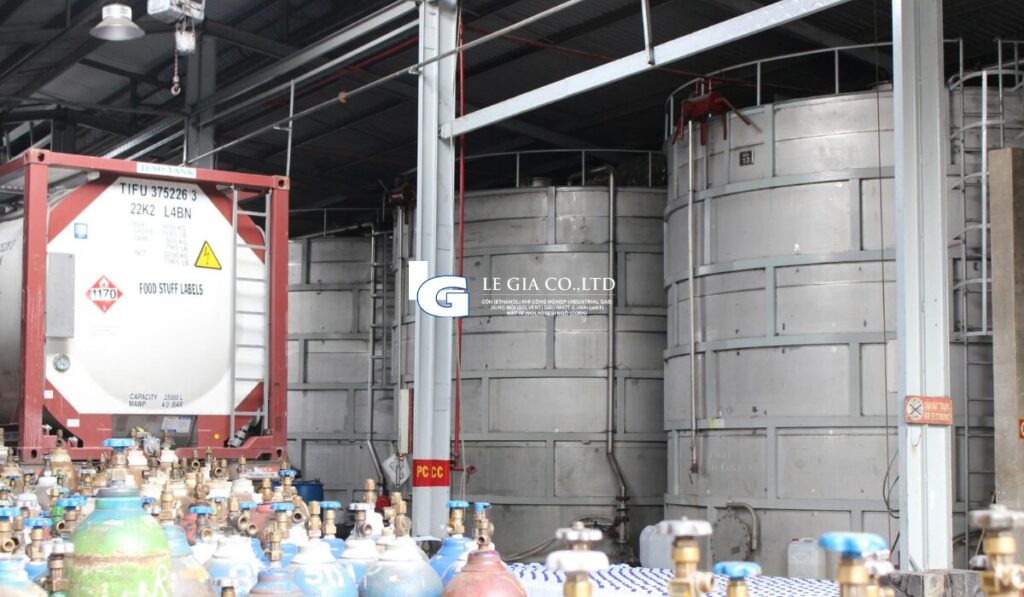
The global supply chain landscape for industrial chemicals is undergoing relentless change, making the strategic sourcing of Vietnam Ethanol a critical objective for major international procurement teams heading into 2026. Are you facing the acute challenge of balancing competitive pricing with the non-negotiable risk of quality compromise, particularly Methanol contamination?
The Vietnamese market, driven by robust Molasses and Cassava feedstock, offers significant export potential, yet it remains fragmented and difficult to navigate without a certified, authoritative partner.
This Master Report cuts through the noise, offering an essential market forecast, dissecting the mandatory export compliance standards (USP/BP), and revealing the key to securing a stable, high-quality Vietnam Ethanol supply that will protect your budget and brand reputation throughout 2026 and beyond.
Is Your Company Ready for the Vietnam Ethanol Opportunity?
The global shift is happening now. Smart procurement teams are securing Vietnam ethanol contracts before Q1 2026 – while others scramble with price shocks and quality disasters.
Here’s the reality: Vietnam ethanol offers exceptional value, but the market is a minefield without expert guidance. One contaminated shipment erases years of brand trust. Yet when sourced correctly, Vietnam ethanol from molasses and cassava feedstocks delivers unbeatable reliability.
I. Why Vietnam Ethanol is Critical for Your 2026 Sourcing Strategy
Vietnam ethanol isn’t an alternative anymore – it’s the strategic choice for Asia-Pacific procurement leadership. The question isn’t whether to source from Vietnam, but whether you’ll secure supply before your competitors do.
The Strategic Advantages
Geographic Superiority: Vietnam’s position slashes shipping times to major APAC markets by 40% versus South American suppliers. Direct routes to Japan, South Korea, and Taiwan mean faster delivery and lower freight risk.
Agricultural Foundation: Unlike single-crop dependencies, vietnam ethanol production leverages dual feedstock resilience – molasses from established sugar operations and cassava from diversified farming networks.
Government Backing: Vietnam’s biofuel mandates (E5/E10 gasoline blending) create baseline demand stability. When export prices fluctuate, domestic requirements prevent market collapse.
1.1 Vietnam’s Production Capacity & Export Power
Current Landscape: Vietnam ethanol production capacity targets both biofuel (E5/E10 gasoline mandates) and high-purity industrial/food-grade applications, with competitive positioning throughout ASEAN.
Export Capability: Official figures vary with raw material availability, but Vietnam maintains proven export strength to demanding markets:
- Japan (strict food-grade requirements)
- South Korea (pharmaceutical standards)
- Taiwan (comprehensive testing protocols)
This export maturity, validated through Le Gia’s 20-year track record, signals market readiness for international procurement demands.
Capacity Resilience: Production concentrates in modernized facilities capable of pivoting between domestic biofuel and export-grade food ethanol. This flexibility prevents the capacity shortages plaguing less developed markets.
1.2 How Molasses Prices Drive Vietnam Ethanol Competitiveness
The Feedstock Connection: Vietnam ethanol pricing links directly to global molasses markets – a sugar industry byproduct that fuels Vietnamese production.
Competitive Edge: Unlike corn-dependent markets, Vietnam benefits from domestic sugar industry integration. When global molasses prices spike due to weather or demand shifts, suppliers with secured relationships weather the storm.
Le Gia’s Strategic Buffer: Our 20-year partnerships with leading molasses producers create cost stability competitors can’t match. We buffer clients against short-term price shocks through:
- Forward contracts with sugar mills
- Diversified sourcing across multiple provinces
- Inventory management during seasonal fluctuations
Budget Impact: This translates to more predictable vietnam ethanol pricing for your 2026 forecasts—typically 8-12% more stable than open-market suppliers.
1.3 Vietnam Ethanol Market Forecast: 2026-2030 Growth
The Long-Term Outlook: Vietnam ethanol growth tracks along multiple drivers converging for sustained expansion:
Domestic Drivers:
- Biofuel policy mandates ensuring base consumption
- Infrastructure investment in purification technology
- Government incentives for renewable energy development
International Drivers:
- Growing APAC demand for food-grade and medical ethanol
- Supply chain diversification away from traditional Western sources
- Increasing USP/BP standard compliance requirements globally
Market Projections:
- 2026: Capacity reaching 850M+ liters with 30% export allocation
- 2028: Expected 15-20% annual growth in high-purity exports
- 2030: Vietnam solidifies top-3 ASEAN ethanol exporter status
Strategic Timing: Entering long-term vietnam ethanol contracts in 2026 positions buyers ahead of this growth curve, securing favorable terms before capacity constraints tighten.
II. Critical Quality Standards for Vietnam Ethanol Export
Quality isn’t negotiable – it’s regulatory survival. The difference between approved shipments and catastrophic recalls hinges on verifiable standards and contamination control.
The Quality Imperative
International procurement demands more than price competitiveness. Your Vietnam ethanol supplier must prove:
- ✅ USP/BP standard compliance
- ✅ Zero methanol contamination protocols
- ✅ Batch-level traceability
- ✅ Independent laboratory verification
Ignore these requirements at your peril. One failed inspection triggers cascading costs: rejected shipments, regulatory fines, brand damage, recall expenses, and lost customer trust.
2.1 How Food Grade Ethanol Vietnam Meets USP/BP Standards
The Compliance Standard: Food-grade vietnam ethanol must exceed local TCVN standards and meet international pharmacopeia requirements:
USP (United States Pharmacopeia): Governs pharmaceutical and food applications in US markets and countries recognizing USP standards.
BP (British Pharmacopoeia): European and Commonwealth market standard for medicinal and food-grade ethanol.
Technical Requirements:
- Purity specifications: ≥ 95% ethanol content (typically 96% for food grade)
- Residual impurity limits: Aldehydes, acids, esters below detection thresholds
- Methanol content: Not detectable (< 0.001%)
- Heavy metals: Compliant with strict pharmacopeia limits
- Organoleptic properties: Neutral taste and odor
2.2 Eliminating Methanol Contamination: The Critical Protocols
The Lethal Risk: Methanol contamination represents the most dangerous quality failure in vietnam ethanol sourcing. This toxic compound causes blindness and death in food/medical applications—yet unscrupulous suppliers use it to adulterate industrial ethanol and cut costs.
Why Standard Distillation Fails: Methanol’s boiling point (64.7°C) sits dangerously close to ethanol (78.4°C). Single-column distillation cannot reliably separate them.
2.3 Understanding Purity Levels: 96% vs 99.5% Absolute Ethanol
Purity Specifications Drive Application and Cost
| Specification | 96% Purity | 99.5% Absolute |
| Production Method | Conventional distillation | Azeotropic dehydration / Molecular sieve |
| Water Content | ~4% (azeotropic limit) | ~0.5% |
| Applications | Food grade, beverages, cosmetics, industrial solvents | Laboratory reagents, pharmaceutical synthesis, electronics |
| Relative Cost | Baseline (100%) | Premium (+25-40%) |
| Vietnam Ethanol Availability | Readily available | Specialized production |
96% Purity Ethanol: This represents the highest concentration achievable through standard fractional distillation—the azeotropic point where ethanol-water mixture boils at constant composition. Suitable for:
- Food and beverage production
- Cosmetic formulations
- General industrial solvent applications
- Hand sanitizers and disinfectants
99.5% Absolute Ethanol: Requires additional energy-intensive processing to break the azeotrope:
- Molecular sieves: Zeolite materials absorb remaining water molecules
- Azeotropic distillation: Chemical additives temporarily alter boiling behavior
Used in applications requiring anhydrous conditions:
- Pharmaceutical synthesis
- Laboratory analysis
- Electronics manufacturing
- Specialized chemical reactions
Procurement Decision: Most vietnam ethanol buyers optimize total cost of ownership by specifying 96% purity. Only choose 99.5% absolute when your technical specifications genuinely require anhydrous conditions—otherwise you’re overpaying for unnecessary processing.
III. How Feedstock Selection Impacts Vietnam Ethanol Quality & Price
Feedstock is destiny. The raw material fermented into vietnam ethanol determines organoleptic properties, supply stability, and production costs—critical factors for food, beverage, and pharmaceutical buyers.
Vietnam’s Two Primary Feedstocks
Molasses: Thick, dark syrup byproduct from sugar refining
Cassava: Starchy root crop processed into fermentable sugars
Understanding the trade-offs directly impacts your supply security and quality consistency.
3.1 Molasses vs Cassava: Supply Stability Analysis
Molasses-Based Vietnam Ethanol: The Stability Advantage
Supply Characteristics:
- Year-round availability: Sugar mills operate on consistent production schedules
- Industrial byproduct: Doesn’t compete with food consumption
- Price predictability: Linked to global sugar markets with established hedging mechanisms
- Large-scale production: Major sugar refineries provide bulk volumes
Risk Profile: Lower vulnerability to seasonal disruptions and food security policies.
Cassava-Based Vietnam Ethanol: The Volatility Factor
Supply Characteristics:
- Seasonal harvests: Peak availability varies by region and climate
- Food market competition: Cassava prices influenced by direct consumption and starch demand
- Government policy sensitivity: Food security regulations can restrict industrial use
- Price volatility: More susceptible to weather patterns and crop yields
Risk Profile: Higher exposure to supply disruptions and rapid price increases.
3.2 Which Feedstock Produces Superior Food & Medical Grade Quality?
The Quality Verdict: Molasses Takes the Lead
For highest-purity applications—food-grade vietnam ethanol and medical/pharmaceutical ethanol—molasses emerges as the preferred feedstock among quality-focused producers.
Why Molasses Produces Cleaner Ethanol:
Fermentation Chemistry:
- Simple sugar content: Molasses contains readily fermentable sucrose, glucose, and fructose
- Clean fermentation: Sugar substrates produce fewer congeners (off-flavor compounds)
- Minimal protein: Lower nitrogen content reduces formation of higher alcohols
- Predictable composition: Industrial molasses maintains consistent quality specifications
Cassava’s Technical Challenges:
- Starch conversion required: Additional enzymatic processing adds complexity
- Protein content: Can contribute to off-flavors and higher alcohol formation
- Varietal differences: Cassava quality varies more significantly by source
Purification Implications: While advanced multi-stage distillation can remove impurities regardless of feedstock, molasses provides a cleaner starting point:
- Fewer distillation cycles required to reach food-grade purity
- Lower energy consumption per liter of final product
- More neutral organoleptic profile with less aggressive treatment
Industry Standard: Premium vietnam ethanol producers supplying pharmaceutical companies and international beverage manufacturers overwhelmingly select molasses feedstock for USP/BP grade production.
3.3 How Vietnam’s Biofuel Policy Stabilizes Industrial Ethanol Markets
The Regulatory Safety Net
Vietnam’s national biofuel mandate creates a unique market stabilization mechanism that benefits international vietnam ethanol buyers:
Policy Framework:
- E5 gasoline: 5% ethanol blend nationwide
- E10 gasoline: 10% ethanol blend (expanding availability)
- Mandatory blending: Refineries required to purchase domestic ethanol
Market Stabilization Effect:
Scenario 1 – Export Demand Declines:
- Domestic biofuel mandate absorbs excess production capacity
- Prevents plant closures and market collapse
- Maintains supplier viability through downturns
Scenario 2 – Export Prices Rise:
- Biofuel baseline ensures producers maintain minimum capacity
- Creates production floor below which capacity doesn’t shrink
- Sustains infrastructure for rapid export expansion
Buyer Benefits:
- Supply continuity: Vietnam ethanol production won’t vanish during global downturns
- Capacity retention: Infrastructure remains operational for long-term contracts
- Price floor protection: Domestic demand prevents catastrophic price collapses
- Counter-cyclical opportunity: When export demand softens, industrial buyers negotiate favorable rates
Strategic Implication: Vietnam ethanol sourcing carries lower structural risk than markets without domestic consumption mandates. Your supply chain gains stability from government policy acting as market ballast.
IV. Ensuring Stable, Compliant Vietnam Ethanol Supply Chains
Supply chain control separates market leaders from market casualties. Price and quality mean nothing if your vietnam ethanol doesn’t arrive on schedule—or arrives contaminated.
The Supply Chain Challenge
Most Vietnam ethanol suppliers operate as traders or brokers:
- No production control
- Quality verification gaps
- Limited logistics management
- Opaque traceability
Result: Cost markups, contamination risks, delivery uncertainties, and zero recourse when problems arise.
International Export Markets Validate Supplier Authority
The Ultimate Credibility Test
Any Vietnam ethanol supplier can claim quality – but export success to the world’s most regulated markets provides irrefutable proof.
These markets demand absolute compliance:
Japan:
- Food Sanitation Law requirements
- Ministry of Health, Labour and Welfare standards
- Zero-tolerance methanol policies
- Complete traceability documentation
South Korea:
- Korean Food Standards Codex compliance
- Ministry of Food and Drug Safety registration
- Pharmaceutical-grade protocols
- Detailed origin verification
Taiwan:
- Taiwan Food and Drug Administration standards
- Import permit requirements
- Third-party laboratory confirmation
- Ongoing surveillance testing
V. Logistics Excellence & Price Stability for Vietnam Ethanol Export
Price per ton means nothing without delivery certainty. Strategic vietnam ethanol sourcing requires mastery of international logistics and financial mechanisms protecting your budget from volatility.
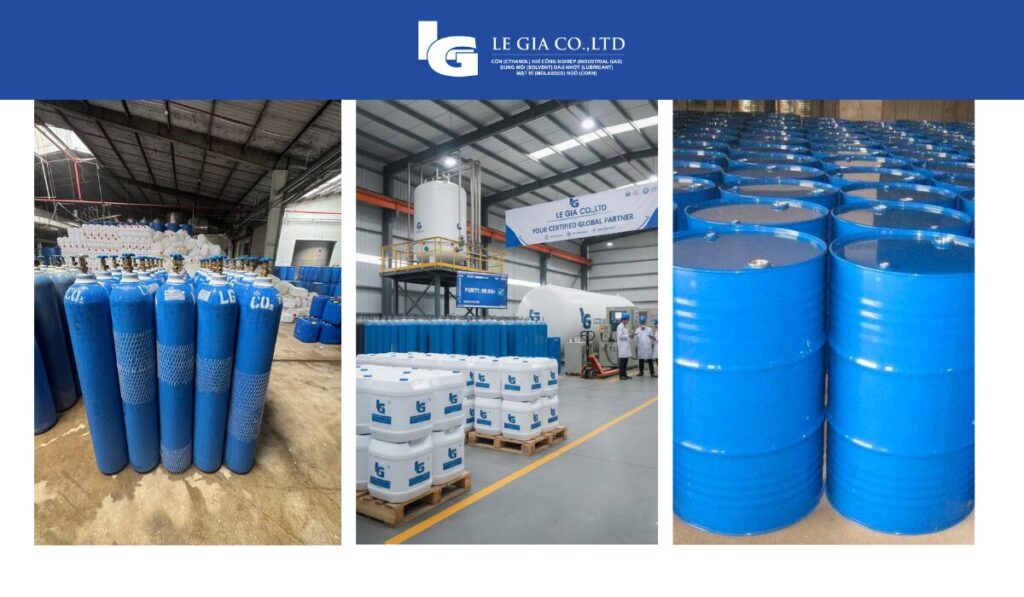
5.1 Secure Export Logistics: ISO Tanks & Chemical Tankers
Large-Scale Vietnam Ethanol Logistics
International ethanol transport demands specialized handling as a hazardous material (UN 1170). The secure methods:
ISO Tank Containers: 20,000-24,000 Liter Volumes
Advantages:
- Purpose-built for chemical transport
- Sealed, contamination-proof design
- Standardized 20-foot container footprint
- Reusable, cost-effective for regular shipments
- Eliminates cross-contamination risks of flexi-bags
Technical Specifications:
- Food-grade stainless steel construction (316L)
- Temperature control capabilities
- Pressure relief systems
- IMDG Code compliant
- International tank container safety standards
Chemical Tankers: 500+ Ton Shipments
Advantages:
- Lowest per-ton transport cost
- Dedicated cargo holds
- Direct port-to-port efficiency
- Suitable for long-term, high-volume contracts
5.2 Price Locking Mechanisms: Protecting Your 2026 Budget
The Volatility Challenge
Vietnam ethanol prices fluctuate based on:
- Global molasses market movements
- Crude oil price impacts on freight
- Currency exchange rate shifts (USD/VND)
- Seasonal demand variations
- Regional supply-demand imbalances
2026 Volatility Forecast: Expect 15-20% price swings between Q1 and Q4 based on historical patterns and anticipated feedstock constraints.
5.3 Critical Certifications: ISO, HACCP, and Trust Validation
Certifications as Non-Negotiable Proof
Trustworthy vietnam ethanol suppliers demonstrate system quality through internationally recognized certifications:
ISO 9001:2015 – Quality Management Systems
What It Proves:
- Documented, consistent processes from order to delivery
- Continuous improvement culture
- Management accountability
- Customer focus and satisfaction measurement
Buyer Benefit: Reduced variability in product quality and service delivery.
ISO 14001:2015 – Environmental Management
What It Proves:
- Environmental impact monitoring and control
- Waste reduction and resource efficiency
- Regulatory compliance framework
- Sustainability commitment
Buyer Benefit: Meets ESG procurement requirements and reduces environmental liability.
ISO 22000 / HACCP – Food Safety Management
What It Proves:
- Critical for food-grade vietnam ethanol
- Hazard analysis and critical control points identified
- Contamination prevention protocols
- Traceability and recall procedures
Buyer Benefit: Absolute requirement for food, beverage, pharmaceutical, and cosmetic applications.
Additional Certifications:
Halal Certification: For markets requiring Islamic compliance
Kosher Certification: For Jewish dietary law compliance
GMP (Good Manufacturing Practices): Pharmaceutical industry standard
VI. Essential Questions About Vietnam Ethanol Sourcing
What is the current price range for vietnam ethanol in 2026?
Food-Grade Vietnam Ethanol (96% purity):
- Spot market: $750-$850 USD/ton (FOB Vietnam)
- Contract pricing: $650-$750 USD/ton (12-month commitments)
- Factors: Molasses costs, USD/VND exchange rate, shipping season
Industrial-Grade Vietnam Ethanol:
- Range: $500-$650 USD/ton depending on purity and denaturation
- Bulk discounts: Available for 500+ ton monthly commitments
99.5% Absolute Ethanol:
- Premium pricing: +25-40% above 96% grade
- Specialized production: Limited supplier availability
2026 Price Forecast:
- Q1-Q2: Stable to slight decline as new capacity comes online
- Q3: 15-20% increase expected (seasonal feedstock constraints)
- Q4: Moderation as harvest pressures ease
Le Gia’s Price Lock Advantage: Clients securing 12-month contracts in Q1 2026 protect against Q3 volatility, potentially saving $100-150/ton compared to spot buying.
What is denatured ethanol and why does it cost less?
Denatured Ethanol Explained:
Definition: Ethanol rendered unfit for human consumption through addition of denaturants—typically methanol, isopropanol, or bittering agents like Bitrex (denatonium benzoate).
Purpose:
- Eliminates or reduces beverage alcohol taxes in most countries
- Allows industrial use without excise duty burden
- Prevents diversion to illegal beverage production
Common Denaturant Formulations:
- Standard Industrial: 5% methanol or 5% isopropanol
- Special Denatured: Custom formulations meeting specific regulatory requirements
- Completely Denatured: Heavy denaturation for general industrial solvent use
Price Difference:
- Undenatured food-grade: Full excise tax liability
- Denatured industrial: Tax-exempt or reduced-rate
- Typical savings: 20-40% depending on destination country’s tax structure
Applications for Denatured Vietnam Ethanol:
- Industrial cleaning solvents
- Paint and coating production
- Ink manufacturing
- Adhesive formulations
- Fuel additives
Le Gia’s Custom Denaturation: Our in-house blending facility creates vietnam ethanol formulations matching your exact regulatory requirements – eliminating compliance risks while optimizing cost.
What are the key tax implications for importing vietnam ethanol to US/EU?
United States Import Considerations:
HS Codes (Harmonized Tariff Schedule):
- 2207.10: Undenatured ethanol (≥80% alcohol by volume)
- 2207.20: Denatured ethanol
Duty Rates:
- Generally low or zero for industrial ethanol under trade agreements
- Higher duties and excise taxes for undenatured beverage-grade
TTB (Alcohol and Tobacco Tax and Trade Bureau) Requirements:
- Import permits required for beverage alcohol
- Denaturing formulations must be pre-approved
- Bond requirements for excise tax liability
European Union Import Considerations:
CET (Common External Tariff):
- Rates vary by end-use classification
- Preferential rates under GSP (Generalized System of Preferences) for Vietnam origin
Excise Harmonization:
- Each EU member state sets own alcohol excise rates
- Duty suspension arrangements for industrial use
- Extensive documentation to prove non-beverage application
VAT (Value-Added Tax):
- Standard rates (typically 19-25%) apply
- Business buyers can reclaim VAT through normal procedures
Critical Documentation:
✅ Certificate of Origin: Proves Vietnamese origin for tariff preferences
✅ Certificate of Analysis (COA): Confirms composition and purity
✅ Safety Data Sheets: Required for customs classification
✅ End-Use Certification: May be required to qualify for tax exemptions
✅ Importer’s License: Alcohol-specific permits in most jurisdictions
What Le Gia Delivers
20 Years of Proven Excellence
- Uninterrupted export operations since 2004
- Zero methanol contamination incidents
- 98%+ on-time delivery performance
- 85%+ client retention demonstrating satisfaction
Full Supply Chain Control
- Production partnerships with top Vietnamese manufacturers
- In-house blending and formulation capabilities
- Comprehensive quality testing at every stage
- Strategic inventory for supply security
International Export Authority
- Validated by success in Japan, Korea, Taiwan markets
- USP/BP standard compliance proven repeatedly
- Complete regulatory documentation expertise
- ISO 9001, ISO 14001, HACCP certifications
Price Stability Solutions
- Long-term fixed-price contracts available
- Price ceiling/floor arrangements
- Transparent pricing—no hidden fees
- Volume discounts for committed buyers
Your Next Steps: Secure 2026 Supply Now
Immediate Actions:
1. Request Your Free Vietnam Ethanol Market Briefing 2026
- Detailed price forecast through Q4 2026
- Supply-demand analysis for your region
- Competitor pricing intelligence
- Risk assessment and mitigation strategies
2. Schedule Your Price-Lock Consultation
- Calculate your annual vietnam ethanol requirements
- Evaluate contract structure options
- Model cost scenarios: spot vs. locked pricing
- Identify optimal commitment levels
3. Initiate Quality Validation
- Receive sample shipment for testing
- Review complete COA documentation
- Schedule facility visit (in-person or virtual)
- Verify certifications and compliance
4. Negotiate Your Long-Term Agreement
- Secure preferential pricing before Q2 surge
- Lock favorable terms for 12-18 months
- Establish volume commitments and delivery schedule
- Finalize logistics and payment arrangements
Contact Le Gia’s International Procurement Desk
🌐Website: www.legia.vn
📧Export Email: ethanol@legia.vn
💬WhatsApp: +(+84) 0908 769 151(Mrs. Thắm)