In the chemical industry, standing at the crossroads of procurement means more than just filling a “shopping cart” – it means choosing a raw material that dictates the yield, purity, and profitability of your entire production line.
For 20 years, Le Gia has been unwavering in its commitment to perfecting the art and science of industrial chemicals. While many view molasses as a kitchen staple, we recognize it as a sophisticated, nutrient-dense byproduct of the sugar refining process that serves as the backbone for high-purity ethanol and specialized solvents.
What Is Industrial Molasses and How Is It Chemically Extracted?
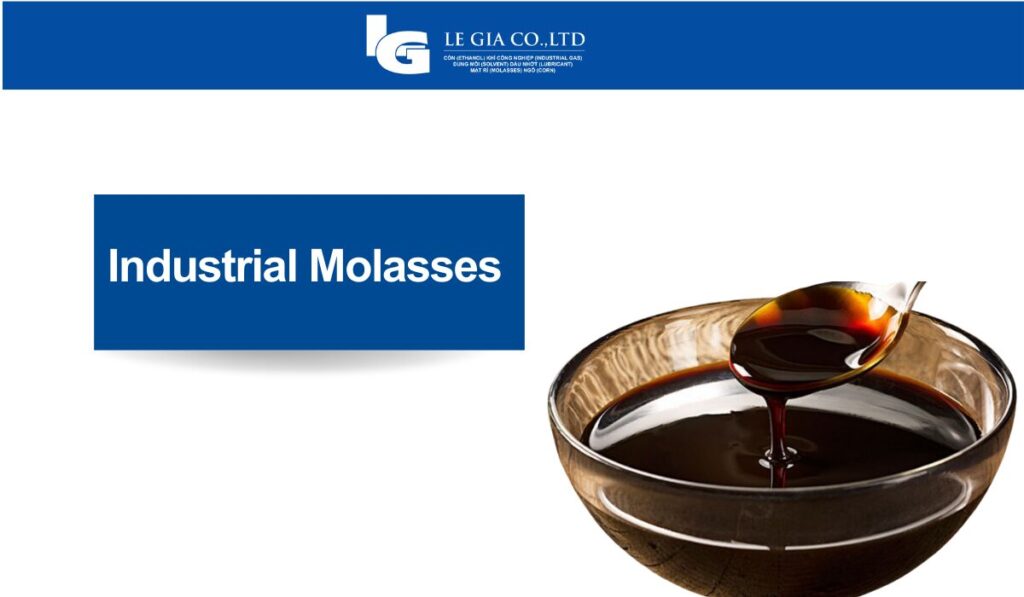
Molasses is the thick, dark, sweet syrup that remains after sugar crystals are extracted from sugarcane during the refining process. Unlike white sugar, which is pure crystallized sucrose, industrial molasses contains the concentrated minerals, vitamins, and flavor compounds that didn’t crystallize. For B2B partners, it is essentially sugar’s more complex, nutrient-dense cousin – a critical material in the chemical industry.
How Does the Centrifugal Force Process Separate High-Purity Feedstock?
The transformation follows an industrial process where sugarcane stalks are crushed to extract juice. This raw juice undergoes boiling to concentrate it and encourage crystallization. The resulting sugar crystals are separated from the remaining liquid syrup through centrifugal force – spinning the mixture at high speeds to separate heavy crystals from the lighter, nutrient-rich liquid.
This liquid is the raw feedstock used by Le Gia to produce high-quality ethanol and industrial gases.
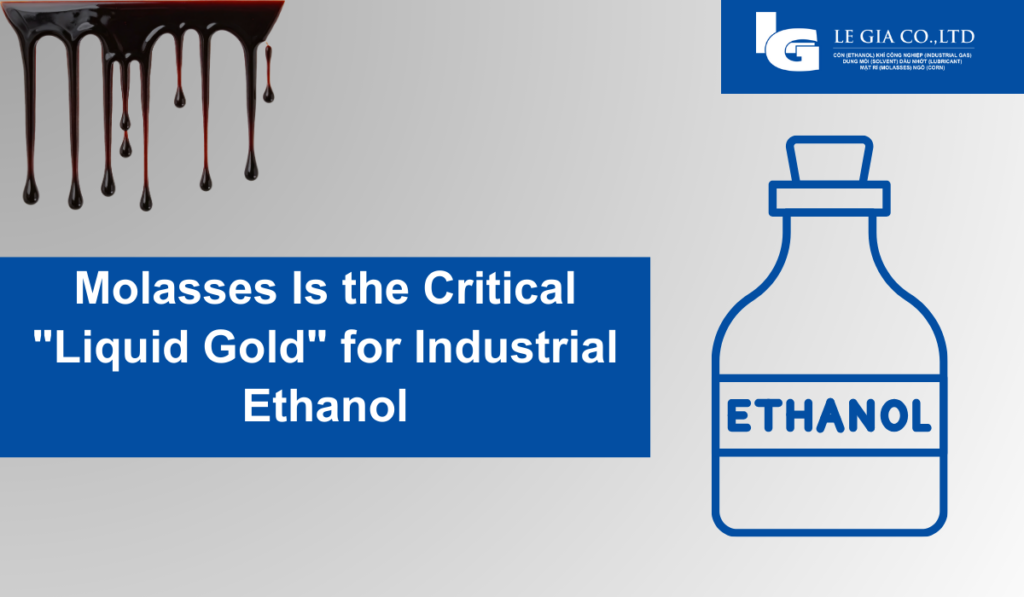
Why Is Molasses the Critical “Liquid Gold” for Industrial Ethanol?
At Le Gia, we specialize in high-purity ethanol, including Food, Medical, and Industrial Grades. Molasses is the vital ingredient here. Because it retains significant amounts of minerals – including iron, calcium, magnesium, and potassium – it provides the organic fuel necessary for efficient fermentation.
How Does the Maillard Reaction Impact Final Chemical Consistency?
During the repeated boiling cycles required to extract sugar, the Maillard reaction occurs. This chemical process between amino acids and sugars gives molasses its characteristic deep brown color and complex flavor notes.
In industrial applications, understanding the intensity of this reaction is crucial for engineering tailored solvent formulations that meet complex global requirements.
What Technical Grades Define High-Performance Industrial Molasses?
Understanding the distinctions between boiling cycles is critical for B2B procurement because each behaves differently in industrial recipes.
- Light Molasses (First Boiling): Retains the highest sugar content (approx. 65%) and has the mildest flavor. It is ideal for rapid fermentation where high sugar availability is the priority.
- Dark Molasses (Second Boiling): Concentrates flavor and minerals while reducing sugar content to 55-60%. It provides the robust character needed for specialized spice-based industrial applications.
- Blackstrap Molasses (Third Boiling): The final variety, where virtually all extractable sugar has been removed. It is the thickest, darkest, and most bitter—but also the most nutritionally dense for industrial fermentation.
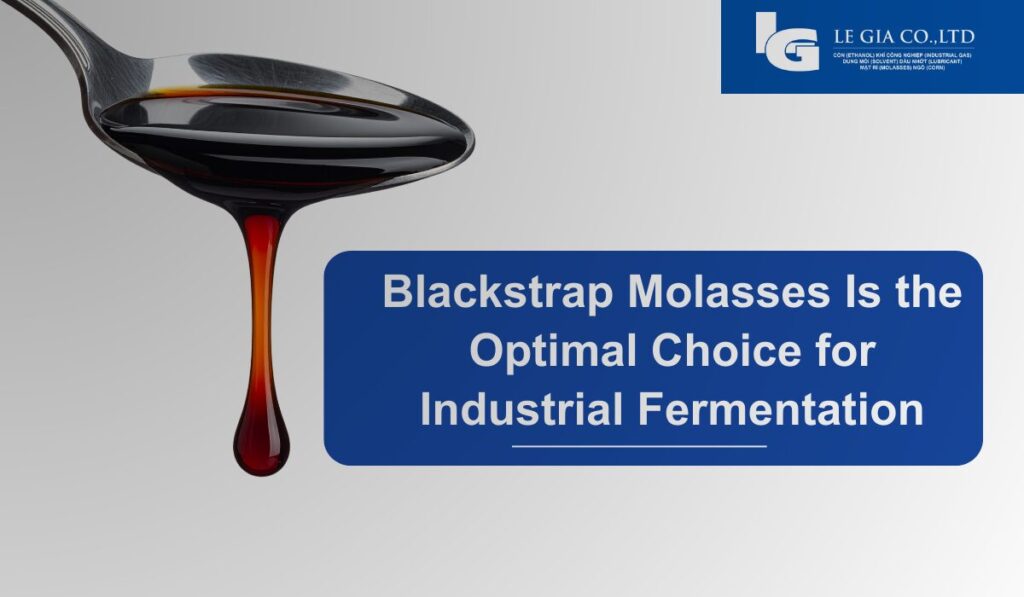
Why Is Blackstrap Molasses the Optimal Choice for Industrial Fermentation?
Blackstrap molasses contains the highest levels of minerals. Just one tablespoon provides 20% of the daily iron requirement. In the chemical industry, these minerals act as catalysts for yeast health during the production of ethanol.
Why Is Unsulfured Molasses Essential for Sensitive Chemical Synthesis?
Most B2B partners require unsulfured molasses, which comes from mature, sun-ripened sugarcane. Unlike sulfured molasses – which uses sulfur dioxide as a preservative for immature cane – unsulfured varieties offer a cleaner chemical profile.
For high-purity medical-grade ethanol, ensuring no residual sulfur dioxide interferes with the formulation is a mandatory quality standard.
How Does Le Gia Ensure a Secure Supply of Industrial Raw Materials?
Le Gia is more than a supplier – we are your trusted expert partner. Our advantages include:
- Quality and Stable Supply: We produce high-purity, international-standard ethanol and industrial chemicals for global markets.
- Flexible Blending: We can blend products to exact specifications, helping clients meet stringent technical requirements.
- Fast Delivery: Controlling the full supply chain allows us to deliver from our facilities within 10 working days.
- Global Certifications: Our commitment to quality is backed by ISO 9001:2015, ISO 13485:2016, etc.
Frequently Asked Questions About B2B Molasses Procurement (FAQ)
Q: Can molasses be used for medical-grade solvents?
A: Yes. Le Gia uses high-purity ethanol derived from molasses to create medical-grade solutions and tailored solvent formulations.
Q: What is the primary difference between beet and cane molasses?
A: Sugar beet molasses is rarely used in human food due to a foul flavor and is primarily reserved for livestock feed or industrial fermentation.
Q: Is industrial molasses considered a waste product?
A: No. While called a “byproduct,” it represents the most valuable mineral-rich portion of the sugarcane plant, essential for sustainable industrial solutions.
Q: How does Le Gia guarantee international quality?
A: We follow the strictest industry standards and professional packaging processes to ensure every product arrives in perfect condition worldwide.